

There is a particular kind of exhaustion that comes with leading an NGO right now.
It is not the exhaustion of doing too much, though that is real, too. It is the exhaustion of holding two things at the same time.
On one hand, the work. The programmes, the communities, the team, depending on you, the mission you built this organisation around. On the other hand, the quiet, persistent anxiety of a funding model that no longer feels as solid as it once did.
The donor who has been with you for six years is “reviewing priorities.” The grant you were almost certain about went somewhere else. The pipeline that used to feel manageable now has gaps you are not sure how to talk about, not to your board, not to your team, and certainly not out loud in public.
So you say nothing. You keep moving. And somewhere in the back of your mind, the question sits.
If the funding shifts, what is our plan?
If that question has been sitting with you longer than you’d like, join us on Thursday, 14 May, for a free one-hour virtual conversation on income diversification for African NGOs — what it really takes, what works, and what doesn’t.
This is not a crisis unique to your organisation
What is happening right now is not a rough patch. It is a structural shift in the funding environment around which African NGOs were built, and it has been building for longer than most people want to admit.
Major bilateral donors are cutting or redirecting aid commitments in response to political pressures in their own countries. The pool of available grants is shrinking while the number of organisations competing for it continues to grow.
Funding cycles are getting shorter, making it nearly impossible to invest in anything long-term, and global crises keep pulling emergency funding away from the kind of sustained development work that takes years to show results.
The organisations that once had stable, predictable income are now asking the same questions you are asking. And the answer the sector keeps arriving at is income diversification.
But here is what nobody is saying clearly enough
Income diversification is not a switch you flip. It is not a social enterprise you stand up in three months, or a fundraising campaign you run when the numbers get tight. It is a strategic decision with real operational consequences, and the gap between deciding to do it and doing it well is wider than most organisations anticipate.
The questions that actually matter are not which income model should we pursue. They are harder than that.
Is your organisation moving from a place of strategy or from a place of fear? Because those two starting points lead to very different destinations. Diversification pursued from panic tends to produce rushed commitments, poorly negotiated partnerships, and new problems that arrive wearing the costume of solutions.
Does your team have the capacity to run something new without cannibalising what already works? A new income stream is a new operation. It needs ownership, systems, and time before it generates meaningful returns. Most income diversification efforts that fail do so not because the idea was wrong, but because nobody was honest about what it would actually take to execute it.
And what will it do to your relationship with the communities you serve? This one gets skipped most often and costs the most later.
What the organisations getting this right have in common
They did not move fast. They asked hard questions before they committed. They were honest with their boards about the timeline and the risk. They built on what they already had: existing expertise, existing relationships, existing credibility, rather than trying to build something entirely new from scratch.
And they found spaces to think it through properly. Not alone, not in a panic, but in conversation with people who had been through it and were willing to talk about the full picture — the wins and the things they would do differently.
That is exactly the conversation we are creating on 14th May
Income diversification is one of the questions that comes up most not as an abstract topic but as a live, urgent pressure that organisations are navigating in real time.
So we are bringing the right people into one room.
NGO leaders who have actually made these and technical experts who have supported organisations through the process. And space for the questions that do not usually get asked in polished conference panels.
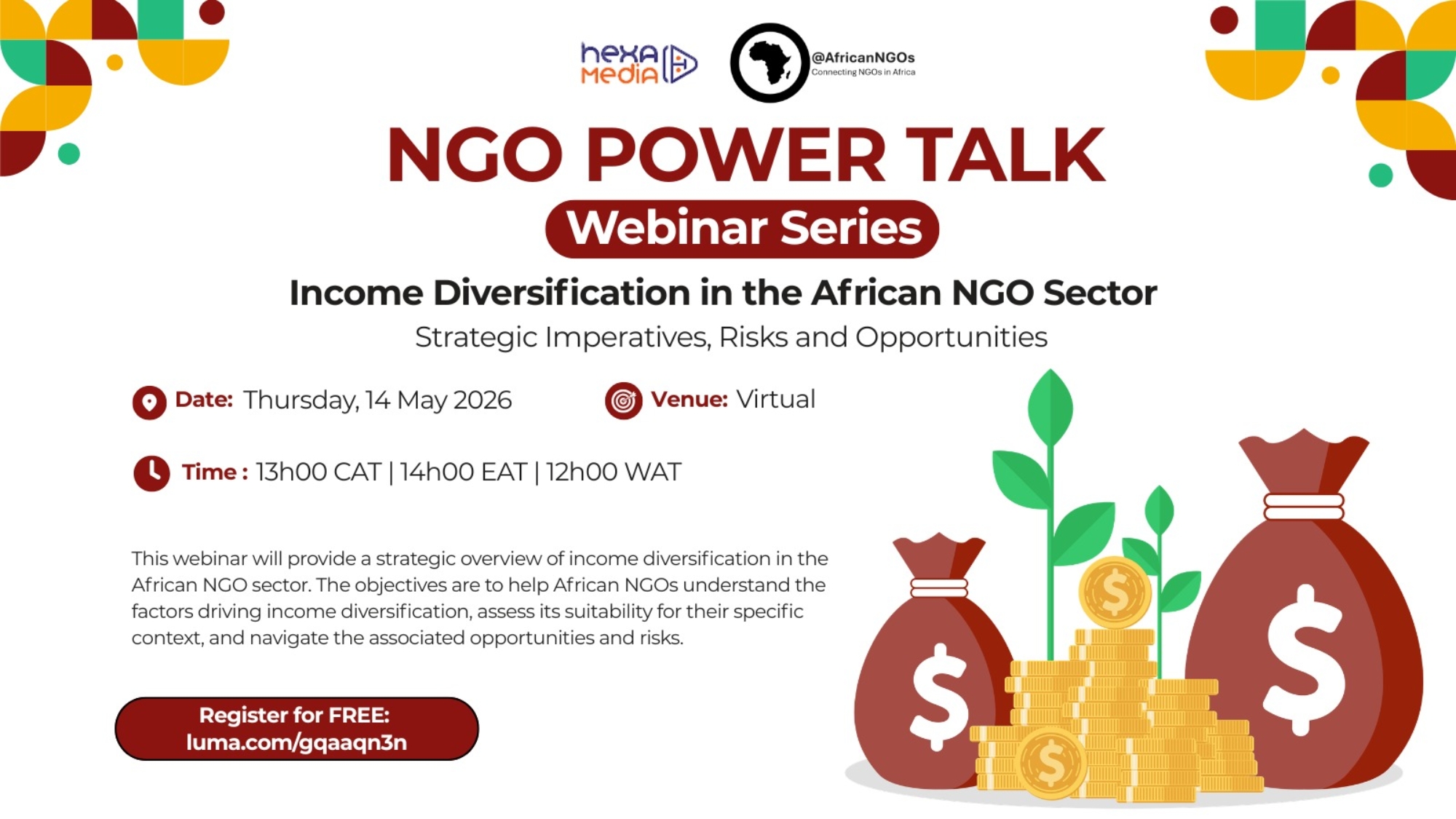
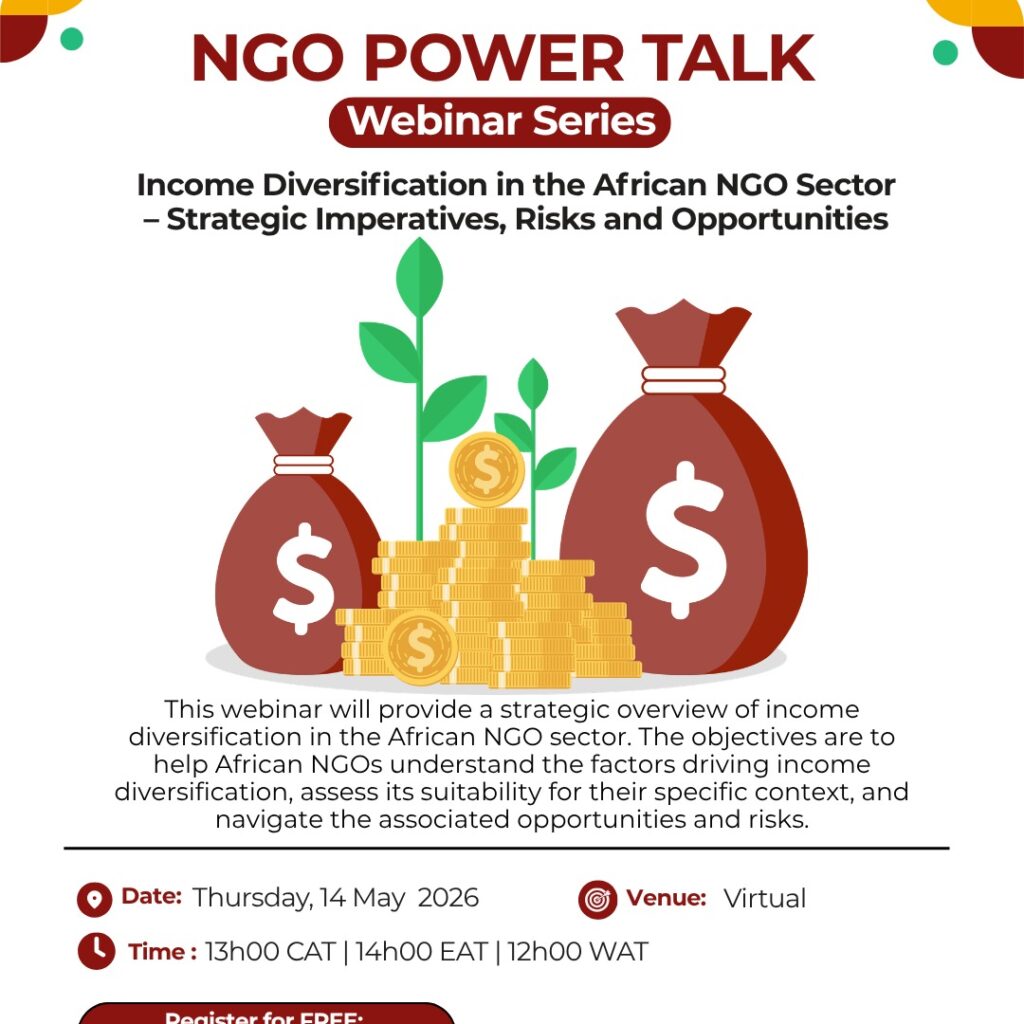
Income Diversification in the African NGO Sector – Strategic Imperatives, Risks and Opportunities
📅 Thursday, 14 May | 12:00–13:00 GMT+1 | Virtual | Free
The sector is shifting. The organisations that come out the other side will be the ones that made deliberate decisions now, not reactive ones.